Catholic Architecture in the Colonies
by Steven Dunn, appearing in Volume 50
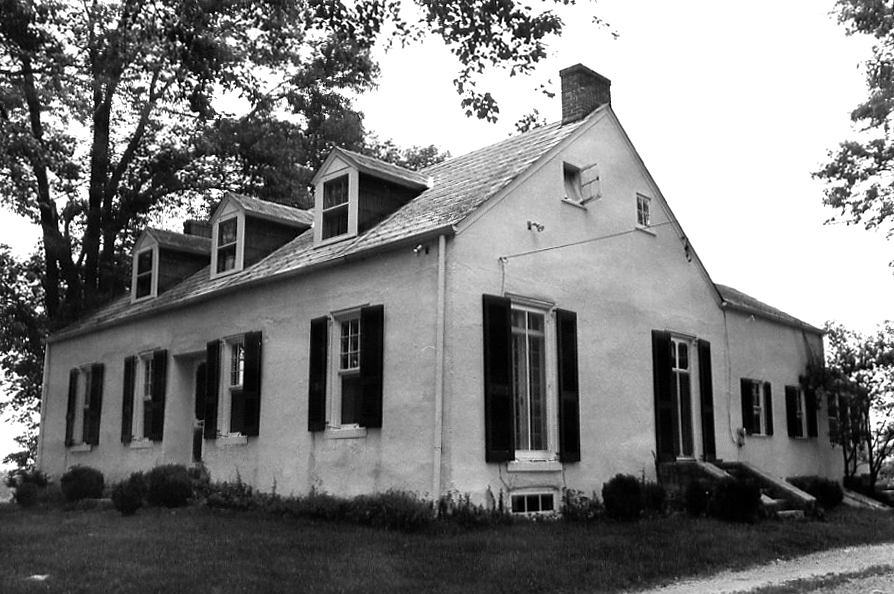
Until the 1930s, there were ruins of an old mill on Deer Creek in rural Maryland. There are probably still ruins today underground, but no one has taken the time to dig them up or catalogue them. Just up the hill from this, across a few fields, is a small, one-story farmhouse with plaster walls about four bays wide. The roof is gabled now, but it was originally hipped until a fire took it in the 1940s. Apart from that it is much as it was in 1743 when it was first built. The name of the farm is Paradice, but people call the building Priest Neal’s Mass House.
Although it looks normal on the outside, the inside doesn’t function like a normal home would. A huge parlor takes up most of the building’s floorplan, and is flanked by two smaller rooms on one end and a reception hall towards the other. The Jesuits owned this property until the middle of the nineteenth century, and today the home is in private hands (inaccessible to curious historians). But it was, for the first forty years of its existence, the heart of Saint Joseph’s mission parish, in an open field in the middle of a working farm.
Priest Neal, who lived in the house in 1756 when the building first appears in writing, said Mass in that parlor for the Catholics of his parish. There were many. His house was built at the northernmost edge of Chesapeake Bay, where, despite being on the opposite end of Maryland Colony from its founding capital at St. Mary’s City, some Catholics had relocated at the turn of the eighteenth century. Although it functioned like a church on the inside, Father Bennett Neal really did live here, his bed taking up space in a loft above the “reception hall.” This is because the law of Maryland in the eighteenth century hinged on two particular restrictions: Catholics could not vote or hold office, and Catholics could not have public Masses in public buildings. While not exactly religious freedom, these laws left several wonderful loopholes open for exploitation, the most important being that a church could still be a church, as long as it was actually a house.
Hence, Priest Neal lived above the narthex.
Priest Neal’s Mass House was just one of a string of Mass houses around the Chesapeake in the middle of the eighteenth century. Luckily, Mass houses were not the only means of worship available to Marylanders, since farmhouses are not the only form of houses. There were also private chapels in great manor houses, such as Doughoregan, home of Charles Carroll of Carrollton, and, most critically, on Jesuit plantations, which fit more properly into the vein of Maryland’s original Catholic chapels than any other option. All of these buildings were surrounded by acres of grass and tobacco, in the country, just like they had been at the end of the seventeenth century. What is stunning about the proliferation of privately-owned Catholic churches in Maryland throughout the eighteenth century is that, despite this critical domestic pivot, they often followed the same patterns as the chapels of the seventeenth century. So, although no Catholic churches in Maryland remain from before the penal laws of 1704, the echo of those original Catholic churches still rings in Maryland’s colonial chapels. Regardless of the time the church was built, many of the Catholic chapels of Maryland during the colonial period grew up in farmland, and those which remain standing are marked by their uniquely pastoral distribution around the state. Maryland’s chapels, like its people, operated by the tobacco plantation system, and they remain in the plantation system’s early pattern.
To understand their origin, one first must understand the collapse of Catholic Maryland.
The End of Catholic Maryland
In 1696, the new Protestant Governor of Maryland, Francis Nicholson, instructed the sheriffs of each of the colony’s then twelve counties to report on the number of public Catholic churches in their vicinity. Maryland’s original experiment with religious freedom had been dashed by the 1689 “Glorious Revolution,” after which William III took direct rule of the colony from Lord Baltimore and began encouraging anti-Catholic legislation. Anglicanism was established as the state church in 1692 and laws were quickly introduced against members of any other sect. Nicholson had been unpleasantly shocked by the proliferation of Catholics in his colony, though this shouldn’t have surprised him given the area’s history, and set out to get a “lay of the land” regarding Papists in the area. His staff reported back a year later that there were nine freestanding public churches throughout the colony, and at least five priests. Though this might not seem like a lot to us, for the population at the time, it was. Maryland had been genuinely founded on the principle of religious liberty, which meant that persecuted Puritans from the neighboring colony of Virginia were welcome from the very beginning. These Puritans were the majority by the late seventeenth century, having established their own rival town to St. Mary’s City in what we now call Annapolis, and they easily outnumbered Catholics everywhere except in St. Mary’s County, where the capital had been before Nicholson’s tenure. The nine chapels were not all located in St. Mary’s County, though, which meant that the Papist faith had spread.
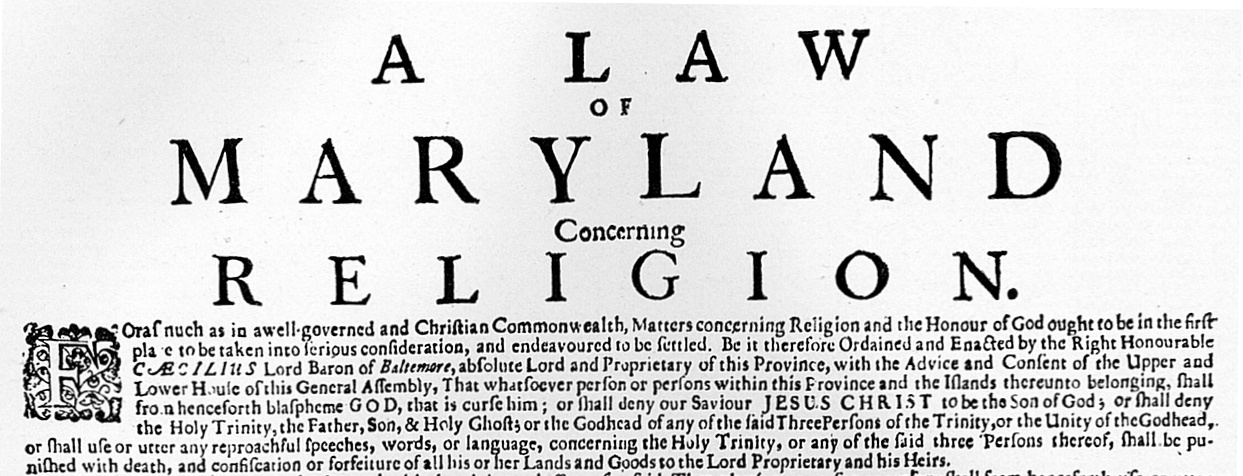
Nicholson quickly introduced laws, with the help of his legislature, against the proliferation of Catholicism in the colony, a tradition he passed on to a later gubernatorial successor, John Seymour. Seymour’s approach was even more aggressive, and in 1704 he sought to prevent rights to inheritance and property among Catholics and to outlaw Catholic Mass. This would have been a death knell in the Catholic colony, had it not been for the direct intervention of Queen Anne, who, quite charitably, retracted most of the strictures of Maryland’s Act for Preventing the Growth of Popery, leaving the law with its main defining characteristic: no public worship. (Catholics had already been banned from holding public office, and lost the right to vote in 1718).
The passage of these laws caused quite a stir among the Catholics of Maryland, for obvious reasons. The Jesuits, who ran almost all operations in the English-speaking colonies, moved their center of operations from Saint Thomas Manor in Port Tobacco (where the Protestant Legislature would know to look) up to a new plantation called Old Bohemia at the northern end of Chesapeake Bay. The Franciscans, who had arrived in the 1670s, eventually gave up and disappeared from the province in 1720 (the parish descended from them remains; it is called Saint Mary’s, Newport). The original nine chapels of Maryland Colony were locked up and, subsequently, pulled down brick by brick, their masonry reused in houses, farm buildings, and (eventually) other chapels.
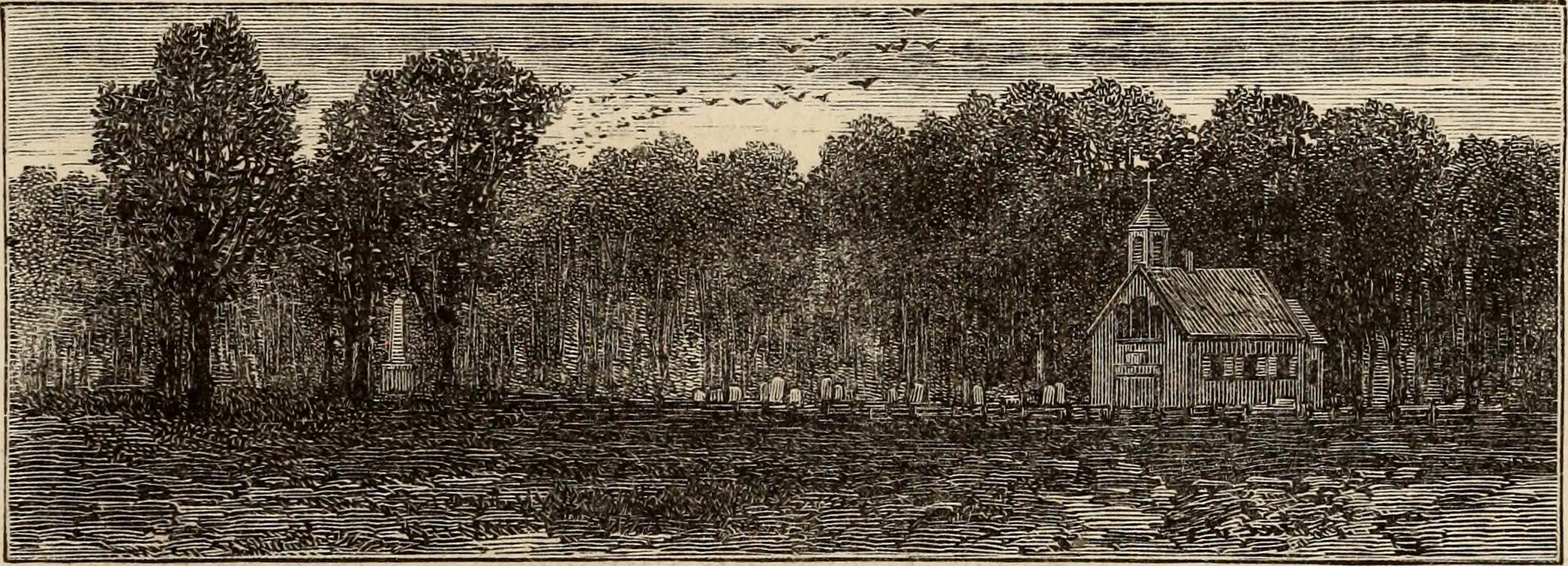
But the Church did not die out, even if it was a significant minority in most counties. And, most critically, the layout of these churches in the pastoral landscape of Maryland did not die out. These Jesuit-managed chapels had been scattered throughout the extremely rural countryside of colonial Maryland from the beginning, since settlers seemed to prefer living on tobacco plantations to living in cities of any sort, leaving many churches in the same position as the recent reconstruction of the chapel in St. Mary’s City: sitting in an open field. Just before the turn of the eighteenth century, the two biggest settlements (St. Mary’s City and the Puritan-founded Annapolis) had only about 200 residents each, even though both had been planned as major cities. The Jesuits themselves weren’t even headquartered in either city when they began operations in the colony; their headquarters was rural too. This is because, as a religiously-free territory, Maryland had been founded without state funds to support any particular Church (unlike in Europe). This meant that, instead of receiving taxes for their support, the Jesuits had been given their own plantations to operate from the beginning. It was the proceeds from these plantations which supported each of the vanished public chapels, and once public churches became illegal, it was on these plantations that the Jesuits began a seven-decade-long journey experimenting with private chapels.
At first, after the end of religious freedom, people worshipped in rooms in the private houses of Catholics, which the Jesuits would circuit-ride to on horseback over the course of several months. On their own farms, the priests re-styled themselves as “bachelor planters” living in communal manors, and rooms in their own manor houses were offered up for Mass as well. But as the Jesuit plantations began to earn money on their own as farms, they began to look more like the gentry plantations of wealthy Marylanders, and that merited bigger and better houses. With bigger and better houses came a cultural opportunity that felt entirely reasonable for country gentlemen at the time. It was in no way unreasonable for a freestanding, private chapel to be included among the outbuildings of a private manor, and so the Jesuits began rebuilding their vanished chapels. Because the original nine had already been excessively rural in character, these replacement churches often operated in much the same way as their predecessors had before penal laws. The Jesuits realized that a church could be freestanding, as long as it was actually part of a plantation.
The First New Chapels
The original chapels, because of their rural locations, were often tied to the bay more than they were to any cohesive settlements. In the seventeenth century, for example, the parish priest of Saint Ignatius, Newtown, could expect to meet his congregants on the beach every Sunday morning, since they came to church by boat. The first of the Jesuit’s rebuilt chapels that we have record of was built with the same orientation.
Saint Francis Xavier, Newtown, was originally built in 1662 near a tiny junction at Newtown Neck, and in 1731, was rebuilt as a frame building attached to the Jesuit Manor one-third of a mile south. The manor house, which in its current iteration dates to a decade later, is built “backwards,” with its rear facing the street people use to get to the church today. That is because, in the eighteenth century, there was no road: congregants arrived at the farm by boat each Sunday, and the new freestanding chapel kept note of this.
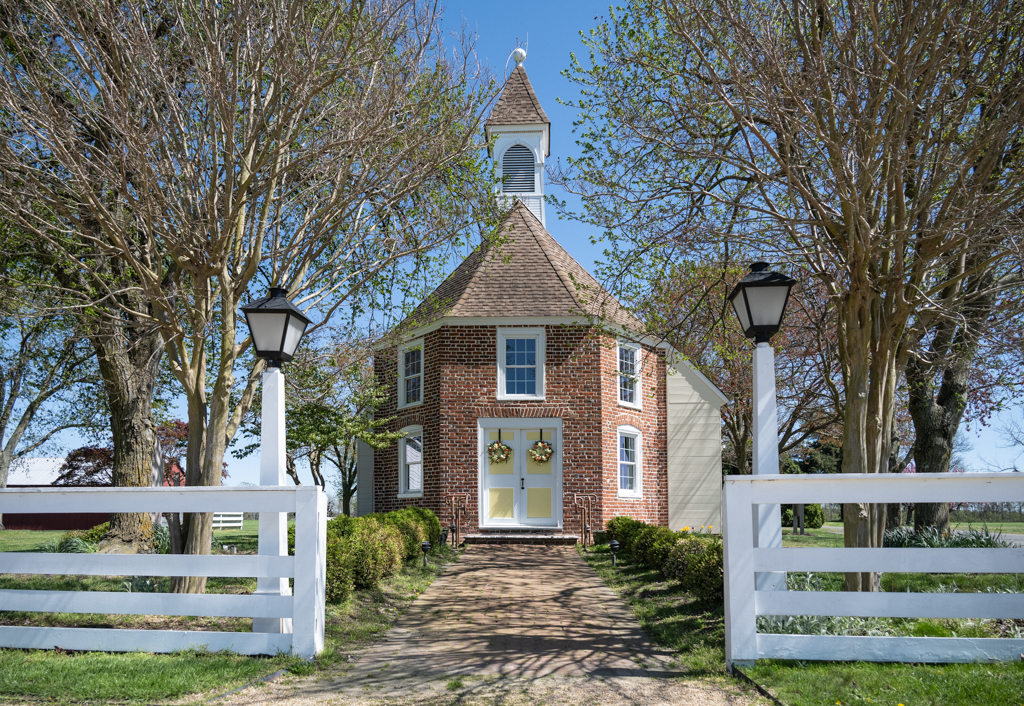
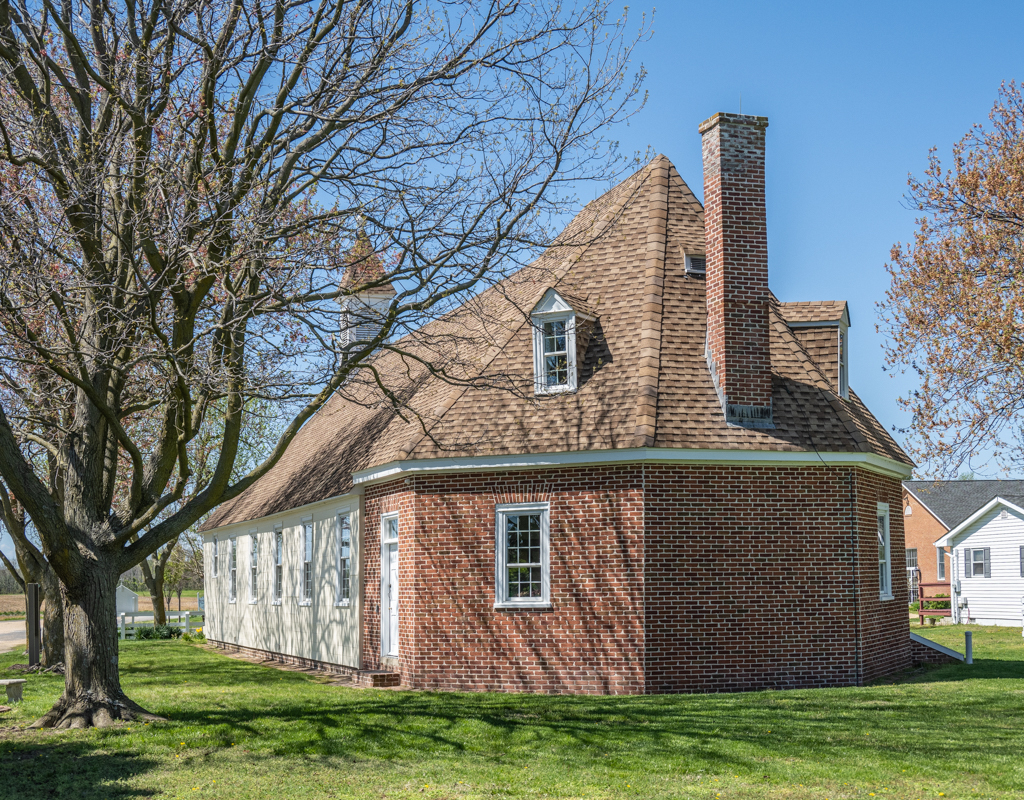
Saint Francis Xavier was the first-fruit of several successful freestanding Jesuit chapels on their plantations, and it is the only one whose core has never been torn down and rebuilt again. The frame building dates to 1731, but it has two octagonal brick additions on each short end, dating to 1767 and 1816, respectively. What makes the building so uniquely odd, other than having what looks like two apses, is that the first octagonal apse-shaped end was built on the wrong side. For about fifty years, the 1767 west octagonal narthex was the only abnormal addition to the building, the east end terminating in a flat, clapboard wall. One entered through what looked like an “apse” to see an altar pressed on the flat end of the church. There is no clear explanation for why, but one can speculate that it might have something to do with how the building looked from the sea when parishioners showed up by boat for Mass. The building is laid out according to a canonical east-west axis, but the bay from which it is visible is to the east. It is entirely reasonable to presume that, because the “front” of the building was a Chesapeake beach (the east end), the “back” of the building was constructed to look like an apse, even though that’s where the entrance actually was. By 1816, a road had been built to the old Jesuit Manor, and the altar-side got its own apse too (and a slightly larger one, just to emphasize its importance).
Other new rebuilds followed Saint Francis Xavier’s. We have records of a new Saint Inigoes near St. Mary’s City in 1745, finally replacing the original Catholic chapel at the heart of the original capital city (which has recently been rebuilt). Other churches were erected without a clear date, but we have evidence of them in the passing remarks of country travellers. These remarks are not always good. At Saint Thomas Manor, in Port Tobacco, a sympathetic Dr. Robert Honeyman reported in 1775 that the attached Saint Ignatius’ chapel was “very elegant with a fine house adjoining.” One year earlier, Colonel Hoskins Hanson described the same building as “a very large barn with an open shed in front.” The building doesn’t exist today, so it is a matter of faith as to the barn-likeness of the chapel on Saint Thomas Manor. The reader may decide who to believe.
The most important plantations seem to have gotten this freestanding chapel treatment. One chapel to have not gone through this process is the formerly Franciscan Saint Mary’s, Newport, which is the only one of the nine 1697 public chapels listed to have actually been the private chapel of an individual planter. The fate of that building is wholly unknown, but it may have been recycled into the 1798 base of the later Saint Mary’s church.
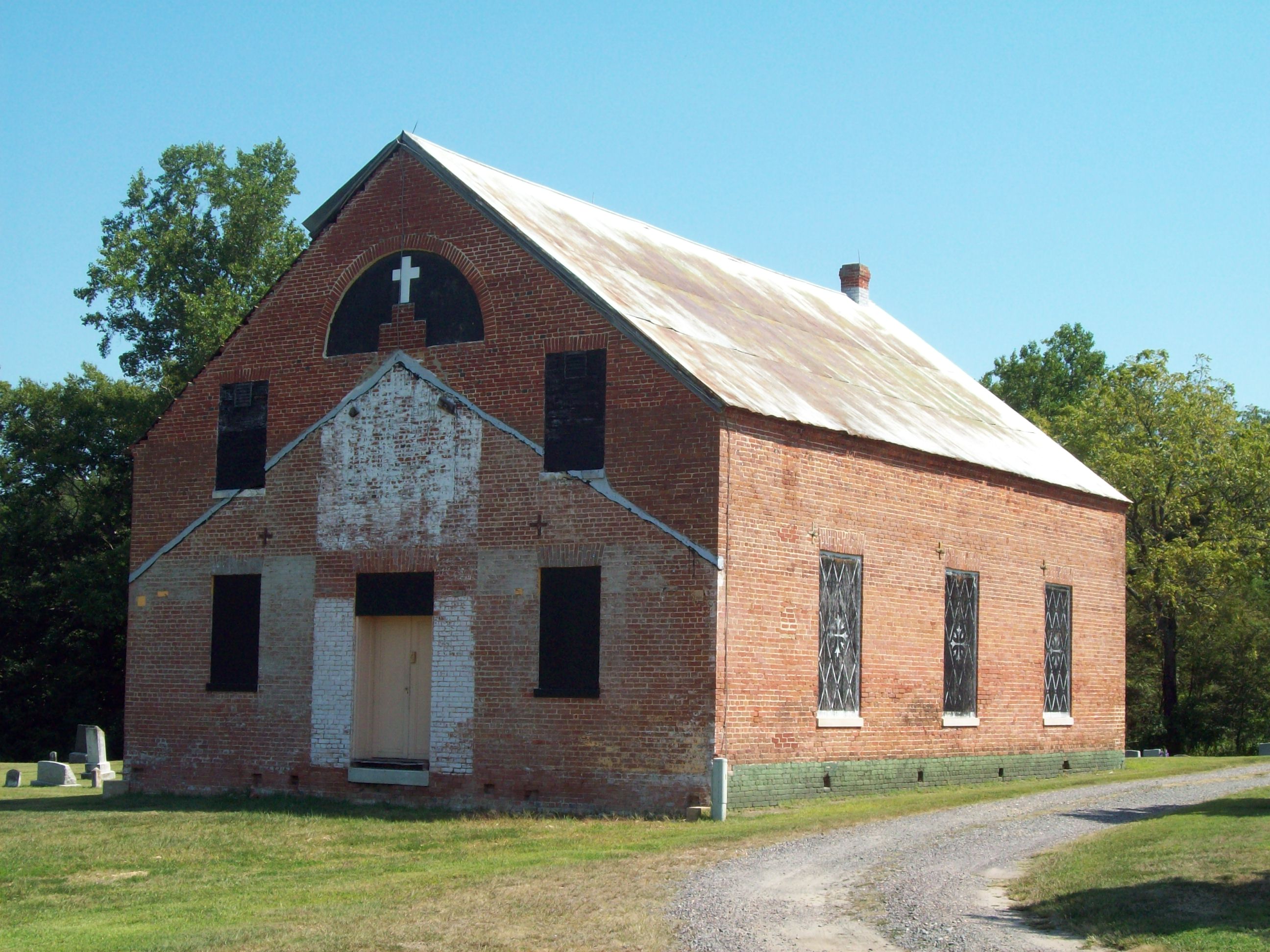
This raises a question: since the Jesuits were confident enough to build freestanding chapels on their property somewhere, why not just build freestanding chapels everywhere? Why even have Mass houses, where some poor priest had to go through the trouble of sleeping in a loft in the narthex? Why not build a chapel adjacent to the farmhouse and move on?
It wasn’t because they had successfully fooled everyone. The Protestants of Annapolis were not unaware of exactly what the Catholics of the colony were doing by building plantation chapels and Mass Houses, and they were certainly not confused about who the “bachelor planters” were or what the real function of Mass Houses was in Maryland. In 1754 the Maryland Gazette, listing the many proofs that “popery” was increasing in the province, not only decried the “great number of popish chapels,” but complained of the Jesuits “having public Mass Houses, where they exercise their religious functions.” After a 1750 law against Catholic priests celebrating Mass went to the legislature but failed to pass, the infuriated Lower House of Delegates wrote a letter to Governor Ogle complaining that Catholics were being sent abroad to St. Omer, getting ordained, and returning as “Popish priests or Jesuits together with others of like kind who live in societies where they have Publick Mass Houses.” But this doesn’t really explain why the Jesuits were able to get away with it; if anything, it pushes the question further. If the function of a Mass House was known, why not just build more chapels?
Much of that which remains from the period implies that, at least in Maryland, it was simply safer to not push the envelope too far. There was no “bill of rights” guaranteeing some form of religious liberty in Maryland, and laws were constantly on the table to further punish Catholics for practicing their religion. The Inheritance Law in 1755 failed in the upper house of Maryland’s legislature, but it was on the books in England, and it was neither the first nor the last of many anti-Catholic laws the Lower House of Delegates tried to pass throughout the century. The French and Indian War renewed anti-Catholic sentiments in the Lower House, and even though these sentiments were not shared by Governor Sharpe or by the Upper House (which prevented most of the anti-Catholic laws from passing), there was constantly the threat of arbitrary legal persecution against Catholics as law-breakers. A large, finely built manor house more clearly merits a freestanding chapel than a simple farmhouse. This interpretation was in tune with the domestic nature of the law. It could more easily be defended as a private, domestic outbuilding. But for Priest Neal’s little farmhouse? It simply would have looked very bad to have one priest living in a vicarage attached to a church and call it a farm. It just pushes the envelope beyond the domestic loophole.
The domestic loophole was clearly very important for Maryland’s Catholics. It is worth noting that, after the 1755 Inheritance Law died in the Upper House, some Catholics of the colony sent a thank-you letter in which, along with expressing gratitude to the members, they addressed two serious lies they felt were being spread about Maryland’s Catholics. The first was that they had done anything which might give Protestants reason to worry that there could be a Catholic insurrection, and the second was “that some Roman Catholick priests of this Province had been lately absent from their usual Place of Residence a considerable time.” They assured the House that there were no such absences, and that Jesuits like Priest Neal really did live in the buildings they said they lived in. Their houses were actually houses (even if they were actually churches).
Despite all of this, the only anti-Catholic legislation to make it through the government of Maryland in the 1750s was a hidden law allowing Catholics to be doubly taxed, snuck into a bill on frontier defense. The governor tried to repeal it but it didn’t work.
And the Jesuits continued their domestic missioning. New missions were established and directed in the state near Annapolis and, in 1763, in Frederick County, as Mass Houses. The Frederick County Mass House was an improvement on Priest Neal’s Mass House in Hickory, because the building was two stories tall. The bottom floor had three rooms and a hallway, which is where the first priest, Father John Williams, spent his day-to-day life. The entire second floor, however, was the chapel.
It is worth noting here, perhaps, that the Jesuits at Old Bohemia ran missions to their north and east as well, some of which were vastly more successful than those in Maryland. Pennsylvania, being a colony with genuine religious freedom, had four standing churches by the 1750s due in no small part to the presence of German Catholics at Conewago and Goshenhoppen. To minister to them the Jesuits of Maryland wrote a letter to their provincial in London, asking him to write to the Jesuit leadership of Germany to request separate priests for their Pennsylvanian flock. To the east, Delaware had a few Catholics, but no buildings were ever constructed. The rest of the colonies were unchurched, and rarely visited by circuit-riding priests. Such was the built state of the Church in America on the eve of Revolution.
The Catholic Resurgence
The American Revolution drew widespread support from Catholics, who hadn’t been able to vote for several decades. Charles Carroll of Carrollton was only able to be a delegate to the Continental Congress because the body was, to a certain degree, extra-legal, and because British norms in Maryland rapidly deteriorated from 1770 onwards. But the most interesting part of this story is what happened immediately after the revolution drew to a close.
Although the Jesuits had been disbanded in 1773, the priests who used to be members of the order remained in Maryland, and their plantations remained the property of the Church. Often their properties were transferred to other orders, such as Saint Thomas Manor, which was given to the French Sulpicians, but the priests remained. And soon, they had new chapels.
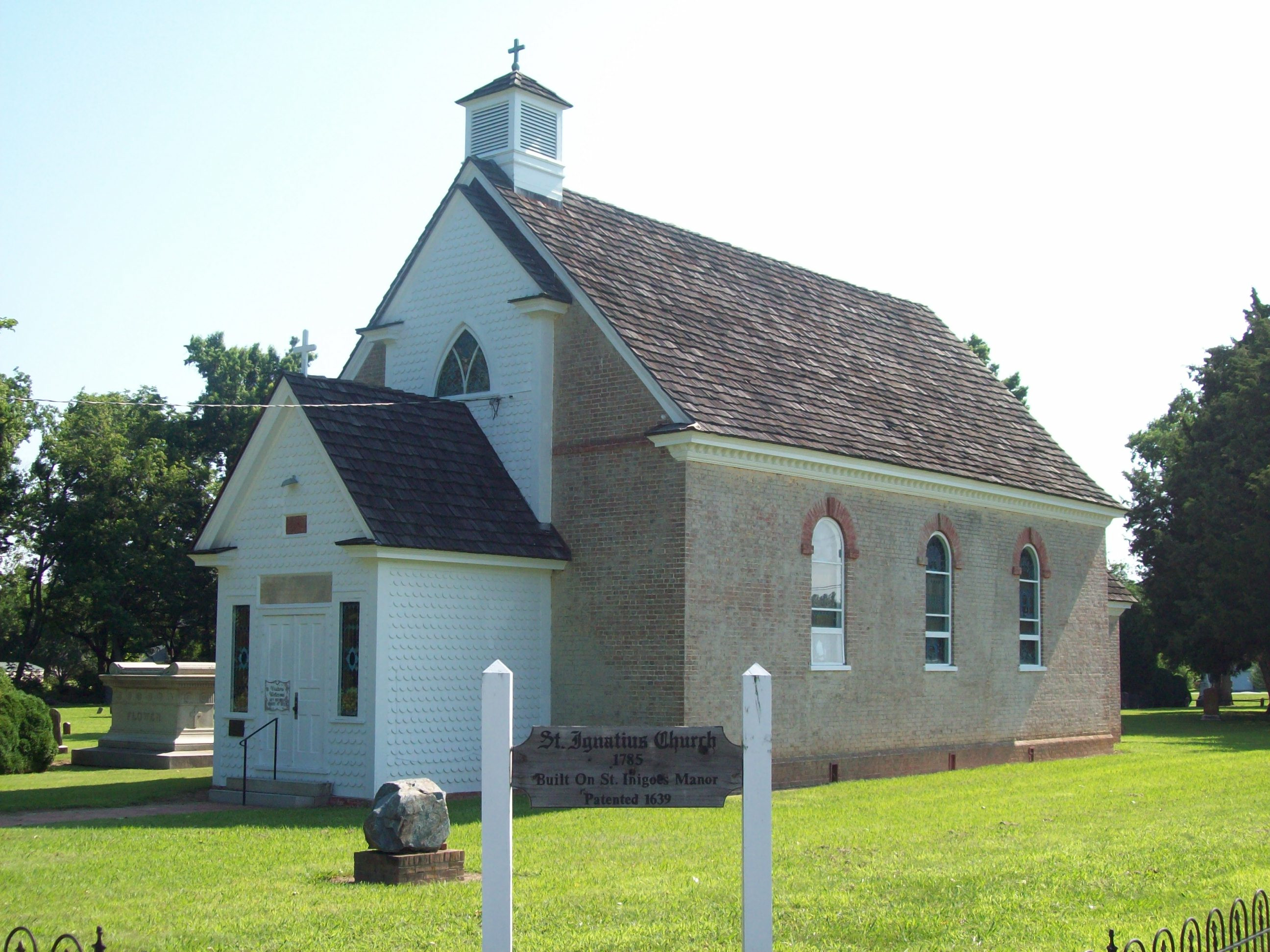
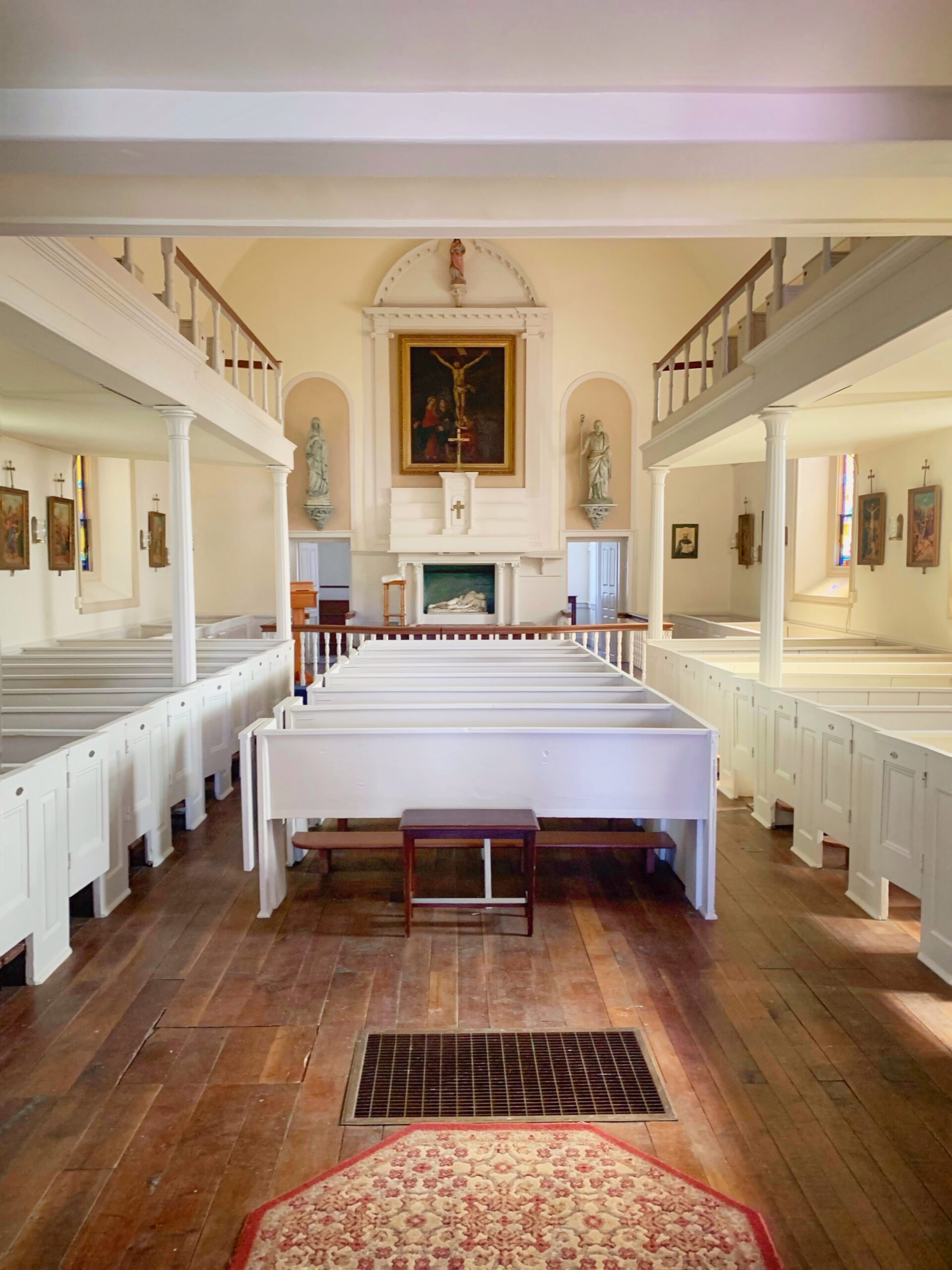
Saint Ignatius, on St. Inigoe’s Manor, the congregation which had begun in 1637 at St. Mary’s City, was the first to be rebuilt, in 1785. A new chapel in the north was begun a year later, also dedicated to Saint Ignatius, to replace poor Priest Neal’s Mass House in Hickory. Soon others were replaced, generally being built in a style consistent with most American churches at the time (a Saint Martin-in-the-Fields-style steeple, gradually receding water tables as was common in Maryland, rectangular plans, and restrained classical interiors), with only one potential exception. Saint Ignatius in Hickory, the Mass-House replacement, apparently had a “pentagonal” apse in its original configuration, though this is presumed by some to mean the five sides which make up half of an octagon. Regardless, the apse is long gone, and the church has been much rebuilt since the turn of the nineteenth century.
Even plantations which had never built a freestanding chapel finally got one at this time. Old Bohemia, for example, got a freestanding church in 1797. Many of the surviving congregations left over from the original nine were rebuilt, although often on the grounds of the plantations where people had been worshipping for half a century. Even churches which have long been mauled by shoddy restorations or reconstruction, like Saint Mary’s in Newport, owe their original fabric to the closing years of the eighteenth century.
This is because Mass was finally public again.
Many of these chapels continue to host Mass today for curious visitors, although as populations have urbanized or grown, many are now used only sporadically, lacking the capacity necessary for a modern parish. But they are all still situated among the tobacco plants, quietly tucked into the countryside of Maryland, free to use for public worship. It is unknown why the Church chose to embark on such a rebuilding spree after the revolution when many of these plantations still had colonial-era chapels standing, but one can only presume that it must have been motivated by joy that a church could once again be a church, and did not have to actually be a house.