Architecture and Liturgy
by Randall B. Smith, appearing in Volume 50

You would need to be living under a rock not to know that the Catholic Church is dealing with disputes about the liturgy. Even an anchorite in a desert hermitage would likely have heard about the current “Liturgy Wars.”
Some want what they call the “Traditional Latin Mass” (usually capitalized), which is a form of the Roman Rite celebrated according to the Missal promulgated by Pius V in 1570 and revised by successive popes through the 1962 edition promulgated by Pope John XXIII. Others accept the Novus Ordo Mass promulgated by Pope Paul VI after the Second Vatican Council but want it celebrated reverently. Still others are delighted with all the changes that have taken place since the Council and would prefer that things stay as they are or be “reformed” even further in the direction they prefer. Oddly, this last group continues to embrace their version of “reform” claiming that “this is for the kids!” even though “the kids” increasingly want more reverent and solemn liturgies. It’s a little like the claim that Marxism is “for the workers” even when the workers don’t want it.
I can’t mediate or resolve those disputes here. Indeed, I was at a conference not long ago where the liturgy was discussed. My colleague Clint Brand described his work on a pontifical commission to revise the Anglican liturgy for use in Roman Catholic “Anglican Ordinariate” churches. It was painstaking work, but the group accomplished what they set to do, and the Roman Catholic parishes of the Anglican Ordinariate continue to grow and thrive. They also tend to build beautiful churches.
When the issue of the Traditional Latin Mass came up, I asked one of the participants, a Roman Catholic priest, whether he thought there would be a rapprochement—some peace, understanding, and acceptance—between the devotees of the Traditional Latin Mass and those who accept the Novus Ordo. Could they get together to do what had been done by those who revised the Anglican liturgy for use in Catholic Church?
His stark answer: “No, not in my lifetime.”

So two groups with a history of 400 years of bitter division with martyrs on both sides were able to get together to hammer out a liturgical reform, but two groups within the Church itself can find no way of coming together to talk? I would say “that’s just silly” if it weren’t so obviously, scandalously wrong.
Although I can’t resolve those disputes—indeed, I’ve probably just angered people on both sides with what I’ve said (“He doesn’t understand how unreasonable those people are!)—I do have a modest proposal that might help soften some of the divisions.
In my experience, priests and congregations live up to the quality and beauty of the architecture around them. Do a Mass on the beach, and you might get beer and pizza instead of wine and bread. Do a Mass in a church that looks like a living room, and you’re likely to get an easy-going “Hey, howya’ doin’” liturgy. Celebrate Mass in a glorious Gothic cathedral with soaring ribbed vaulting, and you’re more likely to get something more reverent.
There’s no guarantee, of course. But people get a “vibe”—a sense of the place—from their surroundings. As Winston Churchill said: “We shape our buildings, and afterwards our buildings shape us.” If you want a reverent liturgy, build a reverent church. It needn’t be as elaborate as a medieval cathedral. Small chapels can be extraordinarily beautiful and reverent. But it must be a church, and not a piece of built Modernist ideology.
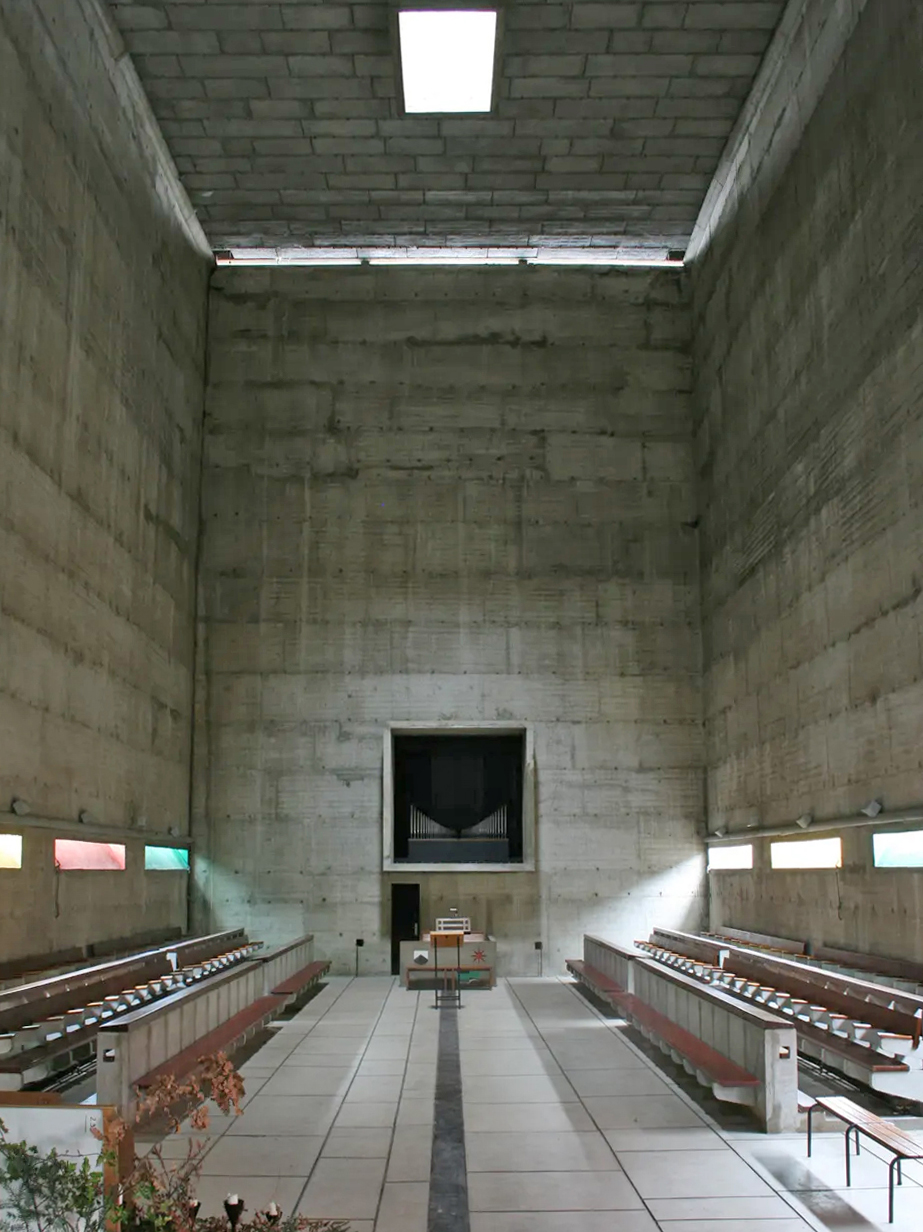
People can struggle heroically in an ugly church to become reverent, just as they can struggle to quiet their minds and souls when they are beset by loud, ugly church music. But why do we make them struggle this way? The spiritual life out in the world is struggle enough.
When people enter a church, they want expressions of faith, hope, and love. They want a foretaste of the heavenly banquet to which we are all called. If they wanted an expression of the “signs of the times,” they would go to a museum of Modern art or simply watch television. If they wanted a place that looked like a shopping mall, they would go to an actual shopping mall. A church is supposed to be a “sacred space,” a place “set apart” for something different. And for that, you want an architect that specializes in building beautiful, reverent churches, not one who has done a bunch of commercial buildings and shopping malls. You don’t get a guy who paints the walls in your house to do a painting of your family. You get someone who has shown he knows what the task requires. So if you want to build or renovate your church, get an accomplished church architect.
Build a reverent, beautiful church or renovate one that was uglified in the aftermath of the Second Vatican Council and maybe—just maybe—the result will be priests and congregations that gain the sense of the worship appropriate to that space.
And, even if I’m wrong about getting a better liturgy, you’ll have a beautiful building to worship in and to hand on to future generations. And then, inspired by the building, maybe they will have a better sense than their forebears about how to worship reverently and well.